

Article: Lab-grown engagement rings: a buyer’s guide
An engagement ring with a lab-grown diamond comes down to five decisions: the certificate, the gold, made to order or from stock, how the design will look and wear on the hand, and what happens after delivery. This guide takes them in order, with AKIND's answer to each, so you can compare us with any jeweller. Updated October 2026
1. Start with the certificate, not the carat
A lab-grown diamond is chemically, optically and physically identical to a mined one. Its essentially a diamond, minus the mining. What varies is the individual stone, and the only reliable measure is an independent grading report from IGI or GIA, which grades cut, colour, clarity and carat and laser-inscribes the report number on the stone. Ask which lab grades the diamonds, and from what size.
At AKIND: every diamond of 0.3 carats or larger is IGI-certified. The certificate, based on IGI’s grading report, is delivered with the ring. Our centre stones are graded D-F colour, VVS1-VVS2 clarity, and cuts are very good to excellent. The grades are stated on each product page. Learn more about our gradings here.
2. 14K or 18K gold
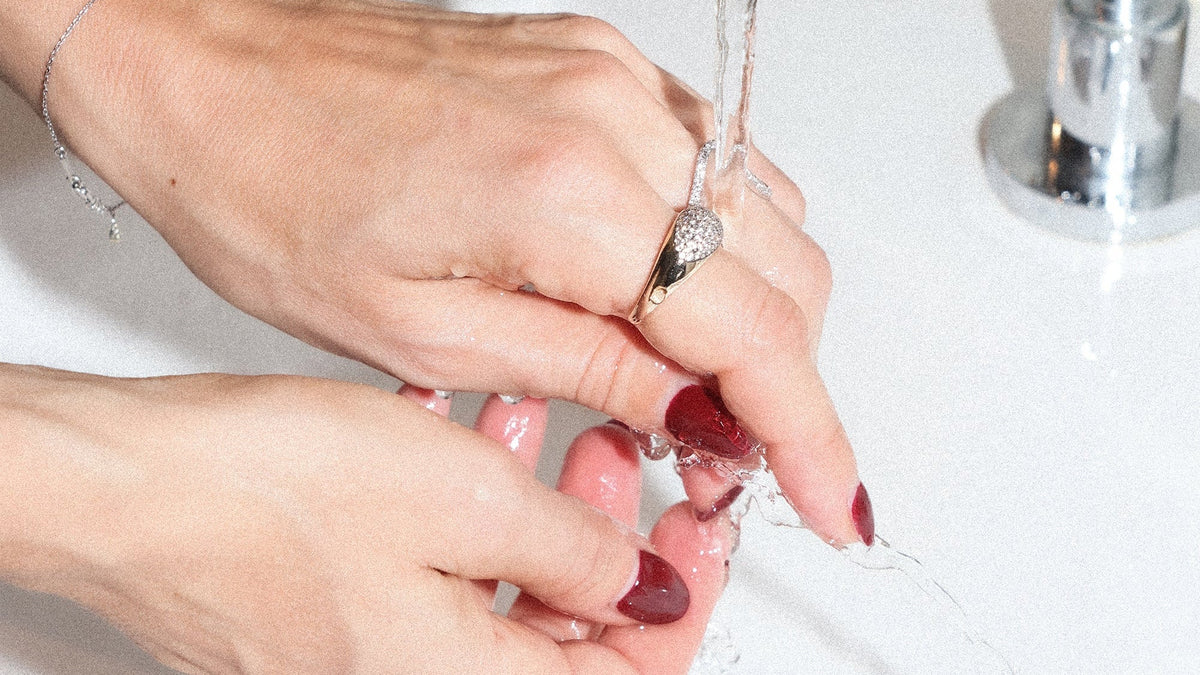
Both are solid gold. 18K is 75% pure and warmer in colour; 14K is 58.5% pure and harder, so it holds up slightly better on a ring worn every day. It is colour against durability, not better or worse. Avoid plated or vermeil for a ring that never comes off, and ask whether the gold is recycled. More on solid gold.
At AKIND: engagement rings are made in 100% recycled 14K or 18K solid gold. There is no silver or vermeil in the bridal collection.
3. Why made to order
A ring made to order is made in your size, your gold and your stone, with nothing sitting in stock. The cost is time: typically three to eight weeks depending on the workshop. Ask for the current lead time before you settle on a design.
At AKIND: every engagement ring is made to order by our goldsmiths in Spain, 4–5 weeks from order to delivery. The collection is curated, so stones and settings are not sold separately. For a specific date, email care@akindstore.com before ordering.
4. Judge the size on a hand, not a screen
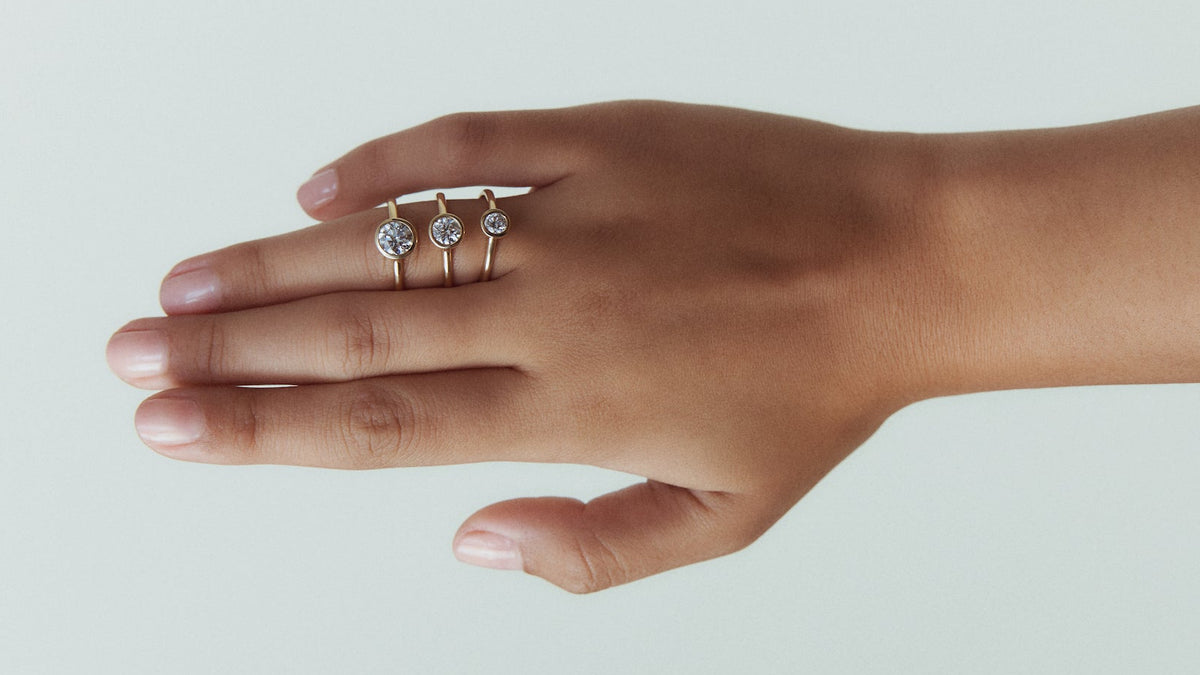
Diamonds look smaller in person than on a screen. A 0.5 ct round brilliant is about 5 mm across; 1 ct is about 6.5 mm. Before you order, check the stone’s millimetre measurements and compare it on a hand, not only on the screen. For a surprise proposal, measure a ring your partner already wears on that finger - our ring size guide shows how, and you can order a free ring sizer from the same page.
At AKIND: every engagement ring page shows the stone and band measurements in millimetres, and every made-to-order ring can be tried at home within the 60-day return window. If you want a second opinion first, book a free 30-minute video consultation from anywhere in Europe, or visit our showroom on Götgatan 9 in Stockholm by private appointment. Book an appointment →
5. Returns, resizing, warranty
Before paying, ask three things: can the ring be returned or exchanged, and within how long; is one resize included, and which designs can't be resized; what does the warranty cover, and for how long. Eternity and diamond-set bands usually can't be resized, so be extra careful to order those in the right size.
At AKIND: made-to-order rings can be returned or exchanged within 60 days of delivery. One resize is included in that window; most designs go one full size up or down, but infinity, patterned, faceted and diamond-set bands can't be resized. Engagement rings and wedding bands carry a 4-year warranty against manufacturing defects.
What it costs
At AKIND, solitaire engagement rings start at €1100 and bezel designs at €1500, in 14K or 18K recycled gold. Carat size and gold karat drive most of the difference; several designs come in five carat sizes. Within the EU, Norway, Switzerland, the UK and the USA, prices include all taxes and duties, and shipping is free above the local threshold. Instalments through Klarna are available in selected countries at checkout.
| Decision | What to ask | AKIND |
|---|---|---|
| Certificate | Which lab, from what carat? | IGI, from 0.3 ct, included |
| Gold | Solid or plated? Recycled? | 100% recycled 14K or 18K solid gold |
| Production | Made to order? Lead time? | Made to order in Spain, 4–5 weeks |
| Seeing it | Video or showroom? Try at home? | Free 30 min by video or at Götgatan 9, Stockholm; 60-day home trial |
| Aftercare | Returns, resize, warranty? | 60-day return, one resize included, 4-year warranty |
| Price | From? Taxes and duties included? | Solitaires from €1,100; DDP in EU, NO, CH, UK, US |
FAQ
Yes. Carbon, with the same crystal structure as mined diamonds; the U.S. Federal Trade Commission describes them as chemically, optically and physically identical. They grow over 6–12 weeks from a seed in a sealed chamber.
An IGI or GIA grading report matched to the stone by laser inscription. AKIND certifies every diamond of 0.3 ct and up with IGI.
A 0.5 ct round is about 5 mm across, 1 ct about 6.5 mm. The setting changes how large the stone reads: a bezel frames it, prongs show more of it.
Three to eight weeks depending on the workshop. AKIND rings take 4–5 weeks from order to delivery.
Yes. Book a free 30-minute video consultation from anywhere in Europe, or visit the showroom at Götgatan 9 in Stockholm by private appointment. Made-to-order rings can also be tried at home within the 60-day return window.
Most rings one full size up or down. AKIND includes one resize within 60 days of delivery; diamond-set and eternity bands should be ordered in the correct size.
Yes, up to 20 characters, free, chosen at order. An engraved ring can't be returned, so if unsure of the design, engrave after the proposal.
Yes, worldwide. Within the EU, Norway, Switzerland, the UK and the USA orders ship duty-paid, so the price at checkout is final.